General & Appealing: Unveiling the Culinary Potential of Wild Turkey
Wild turkey, a staple in North American cuisine for centuries, offers a uniquely robust flavor profile that distinguishes it from its domestic counterpart. Its meat is leaner, richer in iron, and possesses a subtle gaminess that, when prepared correctly, elevates the dining experience. Choosing wild turkey also supports sustainable hunting practices and provides a healthier, free-range protein source free from the additives and hormones often found in commercially raised poultry.
Preparation & Safety: From Field to Table
Field Dressing & Cooling
Prompt and proper field dressing is crucial for optimal flavor and safety. After harvesting, immediately remove the entrails. Rinse the cavity with clean, cold water. Cooling the carcass as quickly as possible is paramount to prevent bacterial growth. Pack the body cavity with ice packs or chill in a cooler with ice.
Aging Wild Turkey (Optional)
Aging enhances the tenderness and flavor of wild turkey, especially larger birds. Hang the bird in a controlled environment (34-40°F / 1-4°C) for 1-3 days. Ensure adequate ventilation to prevent spoilage. If you don’t have a dedicated aging space, dry brining (see recipe) is an excellent alternative.
Food Safety & Internal Temperatures
Wild turkey must be cooked to a safe internal temperature to eliminate harmful bacteria. Use a reliable meat thermometer to check the temperature in the thickest part of the thigh, avoiding the bone. The safe internal temperature for wild turkey is 165°F (74°C). Let the turkey rest for at least 10 minutes after cooking to allow the juices to redistribute, resulting in a more tender and flavorful bird.
The Definitive Recipe: Roasted Wild Turkey with Herb-Garlic Butter
This recipe focuses on preserving the natural flavors of wild turkey while ensuring a moist and tender result. The herb-garlic butter infuses the meat with aromatic notes, while the slow roasting method minimizes dryness.
Prep Time: 30 minutes
Cook Time: 2-4 hours (depending on size)
Total Time: 2 hours 30 minutes – 4 hours 30 minutes
Ingredients
- 1 Wild Turkey (10-14 lbs / 4.5-6.3 kg), plucked and cleaned
- 1/2 cup (113g) unsalted butter, softened
- 4 cloves garlic, minced
- 2 tablespoons fresh thyme leaves, chopped
- 2 tablespoons fresh rosemary, chopped
- 1 tablespoon fresh sage, chopped
- 1 teaspoon kosher salt
- 1/2 teaspoon black pepper
- 1 lemon, quartered
- 1 onion, quartered
- 2 carrots, roughly chopped
- 2 celery stalks, roughly chopped
- 1 cup (240ml) chicken broth or turkey broth
Step-by-Step Instructions
- Prepare the Turkey: Pat the wild turkey dry with paper towels. This is crucial for achieving a crispy skin.
- Make the Herb-Garlic Butter: In a bowl, combine the softened butter, minced garlic, thyme, rosemary, sage, salt, and pepper. Mix well until thoroughly combined.
- Season the Turkey: Gently loosen the skin over the breast and thighs. Rub half of the herb-garlic butter under the skin, directly onto the meat. Spread the remaining butter over the entire outside of the turkey.
- Stuff the Cavity: Stuff the cavity of the turkey with the lemon quarters, onion quarters, carrots, and celery stalks. These aromatics will infuse the turkey with flavor from the inside out.
- Roast the Turkey: Preheat oven to 325°F (160°C). Place the turkey on a roasting rack in a roasting pan. Pour the chicken or turkey broth into the bottom of the pan.
- Initial Roast: Roast the turkey for approximately 2 hours, or until the internal temperature of the thigh reaches 155°F (68°C). Baste the turkey with the pan drippings every 30 minutes to keep it moist and promote even browning.
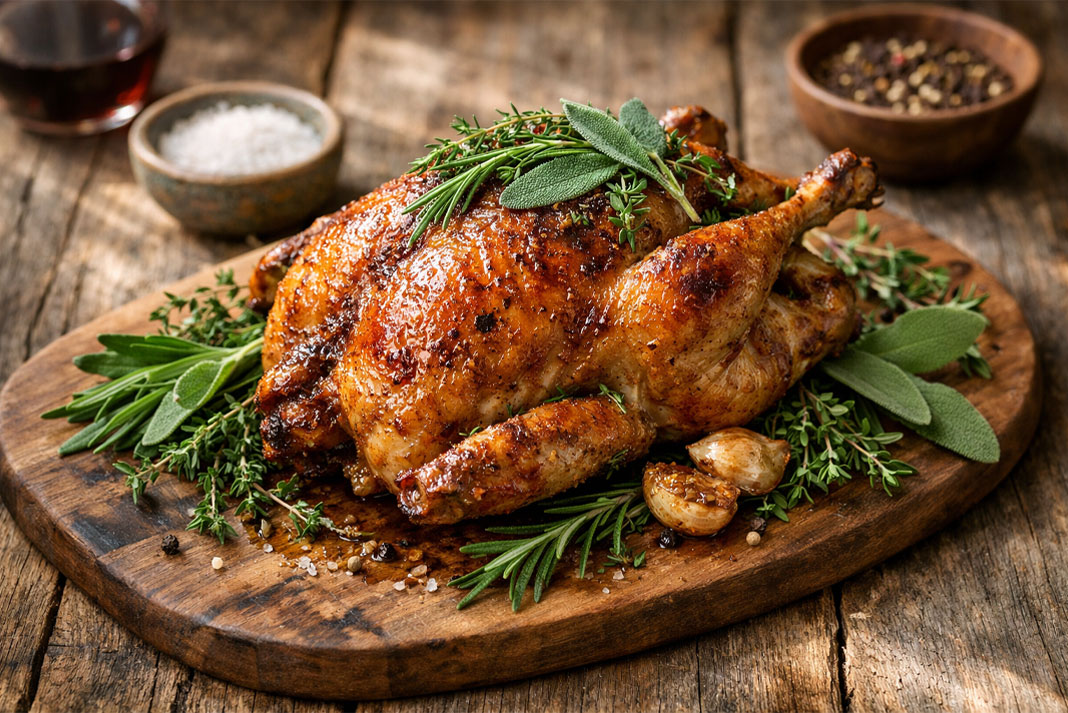
- Increase Temperature and Finish: Increase the oven temperature to 425°F (220°C) to crisp the skin. Continue roasting for another 30-60 minutes, or until the internal temperature of the thigh reaches 165°F (74°C). The skin should be a deep golden brown and incredibly enticing.
- Resting Period: Remove the turkey from the oven and let it rest for at least 10 minutes before carving. This allows the juices to redistribute, resulting in a more tender and flavorful bird.
- Carve and Serve: Carve the turkey and serve with your favorite sides, such as mashed potatoes, stuffing, and cranberry sauce.
Nutritional Data (Per Serving – estimated based on 8 servings)
| Nutrient | Amount |
|---|---|
| Calories | Approximately 350 |
| Protein | 45g |
| Fats | 18g |
| Saturated Fat | 8g |
| Iron | 4mg |
| Vitamin B12 | 3mcg |
Chef’s Secret
Combatting Dryness: Wild turkey is leaner than domestic turkey, making it prone to dryness. Basting frequently and using the herb-garlic butter under the skin helps retain moisture. Consider also dry-brining the turkey 24-48 hours before roasting to further enhance moisture retention and flavor. A simple dry brine consists of 1 tablespoon of kosher salt and ½ teaspoon of sugar per pound of turkey. Rub the mixture all over the turkey, including under the skin, and refrigerate uncovered on a wire rack.
Conclusion
Roasted wild turkey, prepared with care and attention to detail, is a truly remarkable dish. Its robust flavor, combined with the aromatic herb-garlic butter, creates a culinary experience that is both satisfying and memorable. Enjoy the unique taste of the wild, knowing you’ve chosen a sustainable and healthy protein source.
FAQ Section
- Is wild turkey gamey?
- Wild turkey can have a slightly gamier flavor than domestic turkey, but this is often minimized by proper field dressing, cooling, and cooking techniques. The recipe above, with its herb-garlic butter and slow roasting, is designed to enhance the natural flavors while minimizing any perceived gaminess.
- What is the best way to season wild turkey?
- The herb-garlic butter in this recipe is an excellent way to season wild turkey. The combination of fresh herbs and garlic complements the natural flavor of the meat. Experiment with other herbs like oregano or marjoram, or add a touch of spice with a pinch of cayenne pepper.
- Can I substitute butter for olive oil?
- While olive oil can be used as a substitute, the butter provides a richer flavor and helps to create a more tender and moist turkey. If using olive oil, opt for a high-quality extra virgin olive oil for the best flavor.
- What is the ideal internal temperature for wild turkey?
- The ideal internal temperature for wild turkey is 165°F (74°C). Use a reliable meat thermometer to ensure the turkey is cooked to a safe temperature.
- Can I cook wild turkey in a smoker?
- Yes, smoking wild turkey is a delicious alternative to roasting. Smoke the turkey at 250°F (121°C) until it reaches an internal temperature of 165°F (74°C). This will impart a smoky flavor and help keep the turkey moist.