Understanding the Pheasant Flavor Profile
You’re trudging through golden fields at dawn, a crisp chill in the air and the sun beginning to rise. As the first rays skim the surface of the dewy grass, you catch sight of a lively pheasant, its feathers darting like vibrant brush strokes on a canvas of greens and browns. The thrill of the hunt is palpable; this is the essence of backcountry hunting.
Pheasant is a bird that offers a rich narrative of flavor—robust, earthy, and slightly sweet. Wild pheasant carries a depth that farmed birds simply can’t match, thanks to their varied diet of grains, seeds, and the insects they encounter. Every bite tells a story of the wild, making it a true delicacy for anyone who appreciates organic, wild game cooking.
Field-to-Table: The Importance of Food Safety
When you’re transforming your wild game into culinary gold, you must prioritize food safety from field to table. After the hunt, handling the bird correctly is crucial.
-
- Field Dressing: Aim to field dress your pheasant as soon as possible. This keeps the meat clean and reduces the risk of contamination.
-
- Temperature Control: Keep the bird cool. Ideally, you want to get it chilled to 40°F or below within two hours after harvest.
-
- Gutting: Ensure to remove the entrails without puncturing any organs. This will help maintain the meat’s quality.
-
- Internal Temperature: Always cook pheasant to an internal temperature of 165°F to ensure any harmful bacteria are eliminated.
Maintaining these practices ensures you not only savor the exquisite taste of your pheasant but do so safely.
Cook Time: 45 mins
Total Time: 1 hr 05 mins
Nutritional Benefit: High in protein
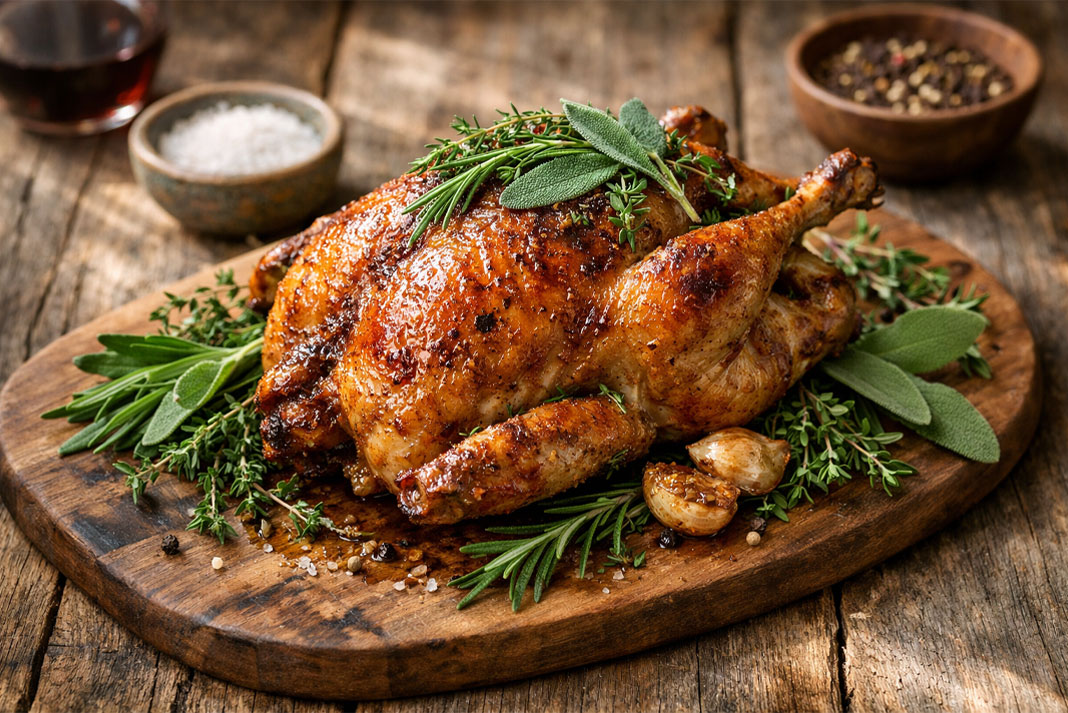
Pheasant Roasted with Wild Herbs
The Pantry and the Field
-
- 1 whole pheasant (about 3-4 lbs)
-
- 2 tablespoons olive oil
-
- 1 tablespoon sea salt
-
- 1 teaspoon black pepper
-
- 2 cloves garlic, minced
-
- 2 sprigs fresh rosemary
-
- 2 sprigs fresh thyme
-
- 1 lemon, halved
-
- 1 cup vegetable or chicken stock
Step-by-Step Culinary Execution
-
- Preheat your oven to 375°F.
-
- Rinse the pheasant thoroughly under cold water and pat dry.
-
- Rub the entire bird with olive oil, sea salt, and black pepper, ensuring an even coating.
-
- Stuff the cavity with minced garlic, rosemary, thyme, and the halved lemon.
-
- Place the pheasant in a roasting pan and pour the stock around it to keep the meat moist.
-
- Roast in the preheated oven for about 45 minutes, or until the internal temperature reaches 165°F.
-
- Let it rest for about 10 minutes before carving to allow the juices to redistribute.
Tools for the Job
-
- Sharp carving knife
-
- Cutting board
-
- Roasting pan
-
- Meat thermometer
-
- Kitchen twine (optional)
The Woodsman’s Edge
The secret to elevating your roasted pheasant dish lies in the resting period. Allowing the meat to rest after cooking maximizes tenderness and moisture retention. This simple step can make a world of difference in the texture and flavor of your dish.
Honoring the Harvest
Pheasant hunting isn’t simply about the thrill; it’s an opportunity to reconnect with nature and appreciate the land that provides. A successful hunt can yield not merely a meal but a deeply enriching experience that honors the wilderness. So, gather your loved ones, sit around the table, and raise a toast to the great outdoors that blessed you with this feast.
Commonly Asked Questions about Pheasant
What is the best way to store pheasant?
It’s best to store pheasant in the refrigerator if you plan to use it within a few days. Otherwise, wrap it tightly and freeze it for up to six months.
Can I marinate pheasant before cooking?
Absolutely! Marinating pheasant can enhance its flavor. Aim for a marinade that includes acidic components like lemon juice or vinegar to tenderize the meat.
What are some side dishes that pair well with pheasant?
Roasted root vegetables, wild rice, or a fresh green salad complement the earthy flavors of pheasant beautifully.
Is pheasant considered healthy?
Yes, pheasant is a lean source of protein, lower in fat compared to other poultry, making it a healthier option.
How can I tell when pheasant is fully cooked?
Use a meat thermometer to check; the internal temperature should reach 165°F to ensure safety and optimal texture.