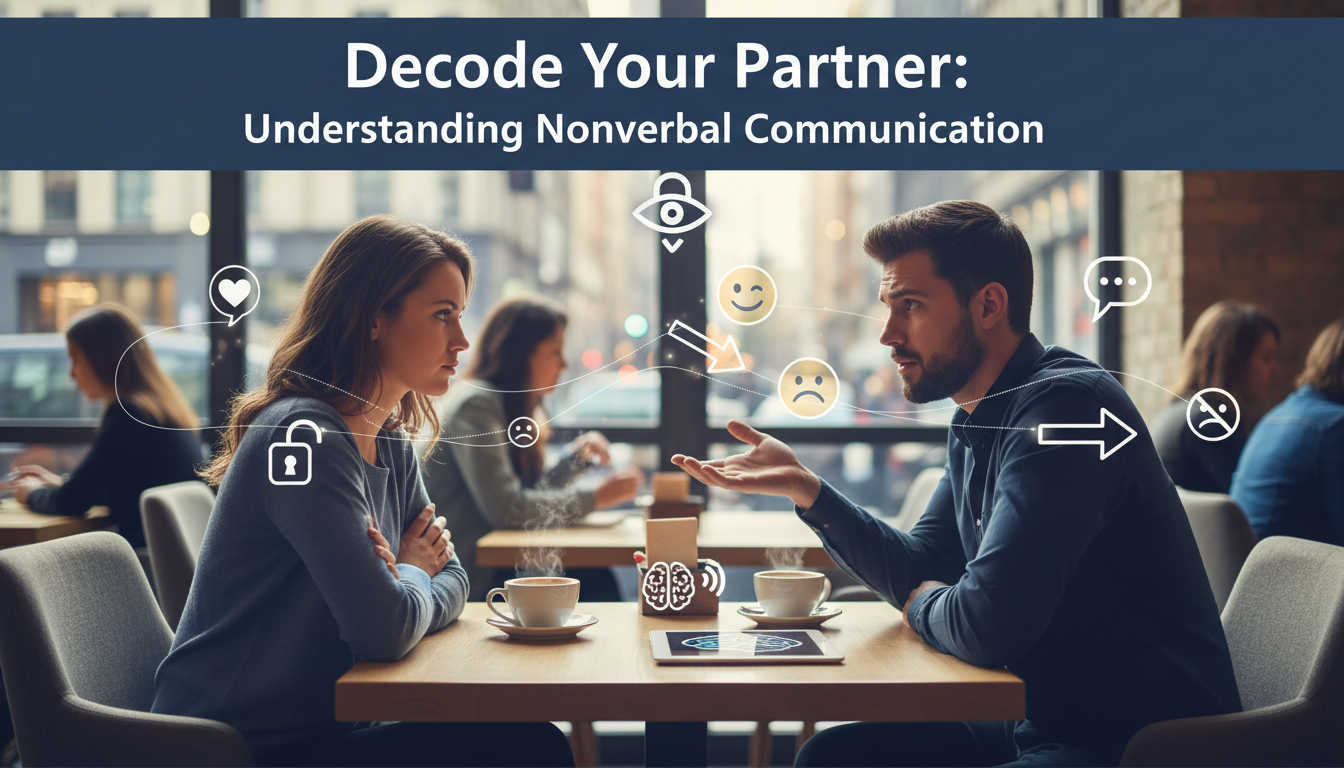
The Silent Language of Love: Deciphering Your Partner’s Nonverbal Cues
Communication, we often believe, resides solely in the words we speak. But what if a significant portion of our message is conveyed without uttering a single syllable? Welcome to the fascinating world of nonverbal communication, a realm where subtle gestures, facial expressions, and even the space we occupy speak volumes, particularly in the intimate landscape of a romantic relationship. Mastering the art of decoding these cues can transform your connection, fostering deeper understanding, empathy, and ultimately, a more fulfilling partnership.
The Body Speaks Louder Than Words: Understanding the Basics
Nonverbal communication, also known as body language, encompasses a vast array of signals. These signals operate, for the most part, subconsciously, revealing our true feelings and intentions even when we attempt to mask them with carefully chosen words. To truly understand your partner, you must become adept at observing and interpreting these subtle cues.
Let’s break down some key components:
- Facial Expressions: The face, often considered the window to the soul, is incredibly expressive. Research, like that conducted at Paul Ekman Group, shows that certain basic emotions – happiness, sadness, anger, fear, surprise, disgust, and contempt – are universally expressed through facial muscles. A genuine smile, for example, crinkles the eyes (Duchenne smile), while a forced smile only involves the mouth. Paying attention to these nuances is crucial.
- Eye Contact: The eyes are powerful communicators. Sustained eye contact typically indicates interest and engagement, while avoiding eye contact can signal discomfort, nervousness, or even dishonesty. Dilated pupils can signify attraction or excitement, a physiological response linked to the release of dopamine and other neurotransmitters.
- Body Posture: The way we hold ourselves communicates our level of confidence, openness, and receptivity. Open postures, such as relaxed shoulders and uncrossed arms, suggest we are approachable and engaged. Conversely, closed postures, like crossed arms or hunched shoulders, can indicate defensiveness or disinterest.
- Gestures: Hand gestures, fidgeting, and other movements can provide clues to underlying emotions. For example, nervous tapping or foot shaking often indicates anxiety, while expansive gestures can suggest confidence and enthusiasm.
- Proxemics: This refers to the use of space in communication. The distance we maintain from others communicates our level of intimacy and comfort. In a romantic relationship, a desire to be physically close signifies intimacy, while creating distance can suggest a need for space or a feeling of disconnection.
- Touch: Physical touch is a powerful nonverbal communicator, conveying affection, support, and intimacy. A gentle touch on the arm, a warm embrace, or holding hands can strengthen the bond between partners. However, it’s crucial to be mindful of your partner’s comfort level and respect their boundaries.
- Voice (Paralanguage): It’s not just what you say, but how you say it. Tone of voice, pitch, volume, and pace all contribute to the overall message. A soft, soothing tone can convey reassurance, while a sharp, raised voice can indicate anger or frustration.
Why Nonverbal Cues Matter So Much in Relationships
Nonverbal communication is often considered more reliable than verbal communication because it is less likely to be consciously controlled. Our bodies often betray our true feelings, even when we try to conceal them with words. This is particularly important in relationships, where honesty and authenticity are essential for building trust and intimacy.
Consider these scenarios:
- Your partner says they’re “fine” after a stressful day at work, but their slumped posture and furrowed brow suggest otherwise.
- You’re discussing a sensitive topic, and your partner avoids eye contact and fidgets with their hands, signaling discomfort or unease.
- During a date, your partner leans in close, maintains eye contact, and subtly touches your arm, indicating attraction and interest.
In each of these scenarios, the nonverbal cues provide valuable insights into your partner’s true feelings and intentions. Ignoring these cues can lead to misunderstandings, misinterpretations, and ultimately, a breakdown in communication.
Decoding the Signals: A Practical Guide
Learning to decode your partner’s nonverbal cues is an ongoing process that requires patience, observation, and a willingness to be vulnerable. Here are some practical tips to help you improve your skills:
- Pay Attention: Start by consciously observing your partner’s body language in different situations. Notice their facial expressions, posture, gestures, and tone of voice.
- Look for Patterns: Don’t jump to conclusions based on a single cue. Instead, look for patterns of behavior over time. Do they consistently avoid eye contact when discussing a particular topic? Do they tend to cross their arms when they feel defensive?
- Consider the Context: Nonverbal cues should always be interpreted within the context of the situation. A furrowed brow might indicate confusion during a complex discussion, but it could also simply be a sign of fatigue.
- Check Your Assumptions: Avoid making assumptions about your partner’s feelings or intentions. If you’re unsure about something, ask for clarification. “I noticed you seemed a little quiet tonight. Is everything okay?”
- Practice Active Listening: Active listening involves paying attention to both the verbal and nonverbal messages your partner is sending. Maintain eye contact, nod your head to show you’re listening, and ask clarifying questions.
- Be Aware of Your Own Body Language: Your own nonverbal cues can also impact your partner’s perception of you. Be mindful of your posture, facial expressions, and tone of voice, and strive to communicate openness, empathy, and respect.
- Discuss Nonverbal Communication: Create a safe space to talk about nonverbal communication. Share your observations with your partner and ask them to do the same. Be open to feedback and willing to adjust your behavior accordingly.
Common Nonverbal Misunderstandings and How to Avoid Them
Even with the best intentions, misunderstandings can arise when interpreting nonverbal cues. Cultural differences, individual variations, and personal biases can all contribute to misinterpretations. For example, in some cultures, direct eye contact is considered disrespectful, while in others it’s a sign of attentiveness. Similarly, some people are naturally more expressive than others, while others tend to be more reserved. Understanding these differences is crucial for avoiding misunderstandings.
Here are some common nonverbal misunderstandings and tips for avoiding them:
- Assuming Silence Equals Disagreement: Silence can mean many things, including thoughtfulness, fatigue, or simply a need for time to process information. Instead of assuming your partner disagrees with you, ask them what they’re thinking.
- Misinterpreting Crossed Arms: Crossed arms are often interpreted as a sign of defensiveness or disinterest. However, they can also simply be a comfortable posture. Instead of jumping to conclusions, consider the context and look for other cues.
- Ignoring Cultural Differences: Be aware of cultural differences in nonverbal communication. What is considered acceptable in one culture may be offensive in another. Do some research and be mindful of your partner’s cultural background.
- Failing to Consider Individual Variations: Everyone communicates nonverbally in their own unique way. Pay attention to your partner’s individual patterns of behavior and avoid making generalizations.
- Projecting Your Own Feelings: Avoid projecting your own feelings onto your partner. Just because you would react a certain way in a particular situation doesn’t mean they will.
The Impact of Technology on Nonverbal Communication
In today’s digital age, much of our communication takes place online through text messages, emails, and social media. This can present challenges for nonverbal communication, as we miss out on the subtle cues that are conveyed through face-to-face interactions. Emojis and GIFs can help to convey emotion, but they are not a substitute for genuine nonverbal communication.
To mitigate the impact of technology on nonverbal communication, consider the following:
- Schedule Regular Face-to-Face Time: Make an effort to spend quality time with your partner in person, where you can fully engage with each other’s verbal and nonverbal communication.
- Use Video Calls: Video calls allow you to see your partner’s facial expressions and body language, which can help to improve communication.
- Be Mindful of Tone in Text Messages: Tone can easily be misinterpreted in text messages. Be clear and concise in your communication, and avoid sarcasm or ambiguity.
- Don’t Rely Solely on Technology: Remember that technology is just a tool. Don’t rely on it as your sole means of communication.
The Path Ahead: Cultivating Deeper Understanding
Becoming fluent in the silent language of your partner is a journey, not a destination. It requires consistent effort, genuine curiosity, and a willingness to be vulnerable. By honing your observation skills, considering the context, and checking your assumptions, you can unlock a deeper level of understanding and connection. Remember, true intimacy isn’t just about the words we say; it’s about the silent symphony of understanding that resonates between two hearts. This includes not just understanding your partner, but understanding yourself. Are you sending the right signals? Are you receptive to what your partner is trying to communicate, both verbally and nonverbally?
Frequently Asked Questions
-
Q: Is it possible to completely master nonverbal communication?
A: While it’s unlikely to achieve perfect mastery, significant improvement is absolutely possible. Nonverbal communication is complex and influenced by numerous factors. However, with focused attention and practice, you can become much more attuned to your partner’s cues and improve your ability to communicate effectively. Remember, it’s an ongoing process of learning and refinement.
-
Q: What if my partner is not very expressive?
A: Some individuals are naturally less expressive than others. If your partner is less expressive, it’s even more important to focus on other cues, such as their tone of voice, posture, and the context of the situation. Don’t pressure them to be more expressive than they are comfortable with. Instead, create a safe and supportive environment where they feel comfortable sharing their feelings, even if it’s not through overt nonverbal displays. Ask open-ended questions to encourage them to elaborate on their thoughts and feelings.
-
Q: How can I tell if my partner is lying to me through their body language?
A: Detecting deception solely through body language is difficult and unreliable. There’s no single “tell” that definitively indicates lying. However, certain clusters of cues may raise suspicion. These include avoiding eye contact, fidgeting excessively, changes in vocal tone, and inconsistencies between verbal and nonverbal messages. It’s crucial to avoid making accusations based solely on body language. Instead, focus on gathering evidence and asking clarifying questions. Trust your intuition, but always consider the possibility of innocent explanations.
-
Q: Can nonverbal communication improve intimacy in the bedroom?
A: Absolutely. Nonverbal communication plays a crucial role in sexual intimacy. Understanding your partner’s desires and boundaries through their body language can enhance pleasure and create a deeper sense of connection. Paying attention to their cues during intimacy, such as their facial expressions, body movements, and vocalizations, can help you respond to their needs and create a more satisfying experience for both of you. Consent is paramount, and nonverbal cues can help you gauge your partner’s comfort level and ensure that you are both on the same page.
-
Q: How does past trauma affect nonverbal communication in relationships?
A: Past trauma can significantly impact nonverbal communication. Individuals who have experienced trauma may exhibit heightened sensitivity to certain cues, such as touch or tone of voice, and may have difficulty regulating their own nonverbal expressions. They might also have a tendency to misinterpret cues based on their past experiences. Creating a safe and supportive environment is essential for helping your partner heal from trauma. Be patient, understanding, and avoid triggers that might evoke past trauma. Seek professional help from a therapist specializing in trauma if needed. Harvard Health offers many resources regarding trauma and its effects.
-
Q: What are some common nonverbal cues that indicate a partner is feeling neglected or unappreciated?
A: Several nonverbal cues can suggest a partner feels neglected or unappreciated. These include a decrease in physical affection (less hugging, kissing, or hand-holding), less eye contact, a more closed-off posture (avoiding facing you directly, crossed arms), a change in tone of voice (becoming more curt or distant), and a decrease in initiation of activities together. They might also exhibit more sighing or a general air of sadness. It’s important to address these cues proactively by initiating meaningful conversations, expressing your appreciation, and dedicating quality time to your relationship.
-
Q: How can I use nonverbal communication to de-escalate conflict with my partner?
A: Employing calming nonverbal cues can be highly effective in de-escalating conflict. Lower your voice and speak softly, maintain a relaxed posture (avoid tensing your body), make gentle eye contact (avoid staring or glaring), and use open hand gestures to show you are listening and approachable. Mirroring your partner’s body language subtly can also create a sense of connection and understanding. Avoid accusatory gestures like pointing or crossing your arms defensively. Above all, maintain a calm and empathetic demeanor to create a safe space for resolution.