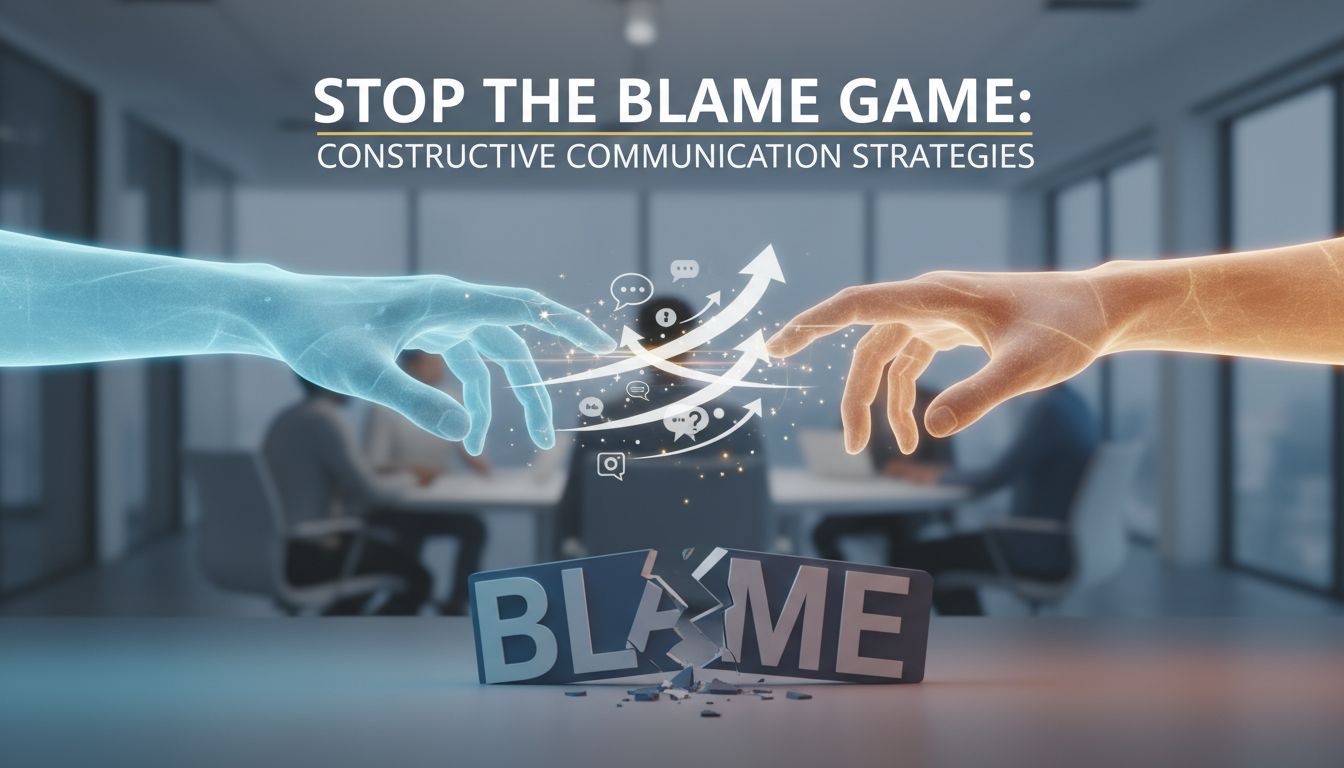
Communication. The very foundation of our relationships, our work, and our well-being. Yet, how often does it devolve into a battlefield where blame is the weapon of choice? The “blame game,” as we often call it, isn’t just unproductive; it’s actively corrosive, eroding trust and hindering the very solutions we desperately seek. So, how do we break free from this destructive cycle and cultivate constructive communication instead? It’s a journey of self-awareness, empathy, and practical strategies that can transform conflict into connection.
Understanding the Roots of the Blame Game
The blame game isn’t some random quirk of human interaction; it’s often a deeply ingrained defense mechanism rooted in our biology and psychology. To understand how to stop it, we need to first understand why we play it.
The Biology of Blame: A Survival Instinct
At its most fundamental level, blame can be linked to our innate survival instincts. When something goes wrong, our brains are wired to quickly identify the cause – the potential threat. This is a legacy of our evolutionary history, where quickly identifying a predator or a dangerous situation was crucial for survival. However, this same instinct can manifest in our interpersonal relationships, leading us to instinctively point fingers rather than collaborate. This “fight or flight” response, triggered by perceived threats, can cloud our judgment and make us defensive. When we feel threatened, our amygdala, the brain’s emotional center, kicks into high gear, often overriding our prefrontal cortex, the area responsible for rational thought and problem-solving. This neurological hijacking makes it incredibly difficult to engage in calm, rational communication.
The Psychology of Blame: Protecting Our Ego
Beyond biology, the blame game is heavily influenced by our psychological need to protect our ego. Admitting fault can feel like a personal attack on our self-worth. We might fear being perceived as incompetent, weak, or simply “wrong.” This fear can lead us to deflect responsibility, rationalize our actions, or outright blame others. Cognitive biases also play a significant role. For instance, the “self-serving bias” leads us to attribute our successes to internal factors (our skills, intelligence, etc.) and our failures to external factors (bad luck, other people’s mistakes). Similarly, the “fundamental attribution error” makes us more likely to attribute other people’s behavior to their personality traits rather than to situational factors. For example, if someone is late for a meeting, we might assume they are irresponsible, rather than considering that they might have encountered unexpected traffic. Understanding these psychological underpinnings is the first step towards overcoming them.
The Impact on Relationships and Well-being
The consequences of engaging in the blame game are far-reaching. It damages relationships, creating distance and resentment between individuals. It hinders problem-solving, as energy is focused on assigning fault rather than finding solutions. And it negatively impacts mental and emotional well-being, leading to increased stress, anxiety, and even depression. Mayo Clinic outlines several aspects of maintaining healthy relationships, many of which are undermined by blame. In the workplace, a culture of blame can stifle innovation and creativity, as employees become afraid to take risks or admit mistakes. In personal relationships, it can lead to chronic conflict and, ultimately, relationship breakdown.
Constructive Communication Strategies: Building Bridges Instead of Walls
Now that we understand the dynamics of the blame game, let’s explore practical strategies for fostering constructive communication. These strategies focus on shifting our mindset, improving our communication skills, and creating a more supportive and collaborative environment.
Shifting Your Mindset: Embracing Responsibility and Empathy
The cornerstone of constructive communication is a shift in mindset. This involves embracing personal responsibility, practicing empathy, and focusing on solutions rather than fault.
- Take Ownership: The first step is to acknowledge your own role in a situation, even if it feels difficult. This doesn’t mean accepting blame for everything, but rather taking responsibility for your actions and their impact on others. Instead of saying “It’s not my fault,” try saying “I understand how my actions contributed to this.”
- Cultivate Empathy: Empathy is the ability to understand and share the feelings of another person. It involves putting yourself in their shoes and trying to see the situation from their perspective. This doesn’t mean you have to agree with their actions, but it does mean acknowledging their feelings and experiences.
- Focus on Solutions: Instead of dwelling on who is to blame, shift your focus to finding solutions. Ask yourself, “What can we do to fix this?” or “How can we prevent this from happening again?” This collaborative approach fosters a sense of teamwork and shared responsibility.
Improving Your Communication Skills: Active Listening and Assertive Expression
Effective communication is a skill that can be learned and practiced. Two key components are active listening and assertive expression.
-
Active Listening: Active listening involves paying close attention to what the other person is saying, both verbally and nonverbally. It means putting aside your own thoughts and judgments and truly trying to understand their perspective. This includes:
- Paying Attention: Give the speaker your undivided attention, making eye contact and avoiding distractions.
- Showing That You’re Listening: Use verbal and nonverbal cues to show that you’re engaged, such as nodding, smiling, and saying things like “I see” or “Uh-huh.”
- Providing Feedback: Paraphrase and summarize what the speaker has said to ensure that you understand them correctly. For example, “So, if I understand correctly, you’re feeling frustrated because…”
- Deferring Judgment: Avoid interrupting or judging the speaker. Let them finish speaking before you offer your own opinions or suggestions.
- Responding Appropriately: Be honest and respectful in your response. Acknowledge the speaker’s feelings and perspectives, even if you don’t agree with them.
-
Assertive Expression: Assertive communication involves expressing your needs and opinions clearly and respectfully, without being aggressive or passive. It means standing up for yourself while also respecting the rights and feelings of others. This includes:
- Using “I” Statements: Express your feelings and needs using “I” statements, such as “I feel frustrated when…” or “I need…” This helps to avoid blaming or accusing the other person.
- Being Specific: Clearly and specifically state your concerns or requests. Avoid vague or general statements that can be easily misunderstood.
- Setting Boundaries: Clearly communicate your boundaries and expectations. Let others know what you are willing to accept and what you are not.
- Maintaining a Calm and Respectful Tone: Even when you are feeling angry or frustrated, strive to maintain a calm and respectful tone of voice. Avoid raising your voice, using insults, or making personal attacks.
Creating a Supportive Environment: Encouraging Open Dialogue and Forgiveness
Constructive communication thrives in a supportive environment where open dialogue and forgiveness are encouraged. This involves creating a safe space where people feel comfortable expressing their thoughts and feelings without fear of judgment or retaliation. It also involves fostering a culture of forgiveness, where mistakes are seen as opportunities for learning and growth.
- Establish Clear Expectations: Communicate your expectations for communication clearly and consistently. Let others know that you value open dialogue, respectful communication, and a focus on solutions.
- Model Constructive Communication: Lead by example by demonstrating constructive communication in your own interactions. This includes actively listening to others, expressing your needs assertively, and focusing on solutions rather than blame.
- Provide Feedback: Offer constructive feedback to others on their communication skills. Focus on specific behaviors that can be improved, and offer suggestions for how to do so.
- Encourage Forgiveness: Foster a culture of forgiveness by acknowledging that everyone makes mistakes. Encourage people to learn from their mistakes and move forward.
- Celebrate Successes: Acknowledge and celebrate instances of constructive communication. This reinforces positive behaviors and creates a more supportive and collaborative environment.
Navigating Difficult Conversations
Even with the best intentions, difficult conversations are inevitable. Here’s how to navigate them constructively:
- Choose the Right Time and Place: Don’t try to have a difficult conversation when you are tired, stressed, or distracted. Choose a time and place where you can focus on the conversation and avoid interruptions.
- Start with a Positive Note: Begin the conversation by acknowledging something positive about the other person or the relationship. This can help to create a more positive and receptive atmosphere.
- Focus on the Issue, Not the Person: Frame the conversation around the specific issue at hand, rather than attacking the other person’s character or personality.
- Take Breaks When Needed: If the conversation becomes too heated or emotional, take a break. This allows you both to calm down and regain perspective.
- Seek Professional Help: If you are struggling to communicate constructively on your own, consider seeking professional help from a therapist or counselor.
Moving Forward: Building a Culture of Constructive Communication
Transforming communication from a blame game to a constructive dialogue is an ongoing process, not a one-time fix. It requires continuous effort, self-reflection, and a commitment to building healthier relationships. By embracing responsibility, cultivating empathy, and honing your communication skills, you can create a ripple effect, fostering a culture of constructive communication in all aspects of your life. Remember, the goal isn’t to avoid conflict altogether, but to navigate it in a way that strengthens relationships and promotes growth. Mindful.org offers resources on mindful communication which complements these strategies.
FAQs: Your Questions Answered
Here are some frequently asked questions about stopping the blame game and fostering constructive communication:
1. What if the other person refuses to take responsibility for their actions?
This is a common challenge. You can’t force someone to take responsibility. Focus on your own actions and reactions. Use “I” statements to express how their actions affect you, and set clear boundaries for what you are willing to tolerate. For example, “I feel disrespected when I’m interrupted, and I need to be able to finish my thoughts. If this continues, I will need to end the conversation.” If the other person consistently refuses to take responsibility, you may need to limit your interactions with them or seek professional help.
2. How do I stop myself from getting defensive when someone criticizes me?
Recognize that defensiveness is a natural reaction, but it doesn’t have to control you. When you feel yourself getting defensive, take a deep breath and remind yourself that criticism isn’t necessarily an attack on your character. Try to listen to the criticism with an open mind, and ask clarifying questions if you’re unsure what the person means. Remember that even if you disagree with the criticism, there may be some truth to it. Use the feedback as an opportunity for growth.
3. What if I’m the one who’s always playing the blame game?
Self-awareness is key. Acknowledge that you have a tendency to blame others, and explore the reasons behind it. Are you afraid of taking responsibility? Do you have low self-esteem? Once you understand the root causes of your behavior, you can begin to change it. Practice taking ownership of your actions, and consciously avoid blaming others. When you feel the urge to blame, pause and ask yourself what you could have done differently.
4. How do I deal with someone who is constantly attacking me personally?
Personal attacks are never acceptable. Set clear boundaries by stating that you will not tolerate personal attacks. For example, “I’m willing to discuss this issue, but I will not tolerate personal attacks. If you continue to attack me, I will end the conversation.” If the attacks persist, disengage from the conversation. You may also need to seek help from a therapist or counselor to develop strategies for dealing with difficult people.
5. What if I apologize, but the other person won’t accept my apology?
An apology is an important step, but it doesn’t guarantee forgiveness. You can’t control how someone else reacts to your apology. Focus on offering a sincere and heartfelt apology, and then give the other person space to process their feelings. Avoid demanding forgiveness or trying to force them to accept your apology. Ultimately, it’s up to them to decide whether or not to forgive you.
6. How can I encourage constructive communication in my workplace?
Lead by example by modeling constructive communication in your own interactions. Encourage open dialogue, active listening, and a focus on solutions. Establish clear expectations for communication, and provide feedback to employees on their communication skills. Consider implementing training programs on constructive communication and conflict resolution. Create a culture where mistakes are seen as opportunities for learning and growth, rather than opportunities for blame.
7. Is it ever okay to assign blame?
While the focus should always be on constructive solutions, acknowledging responsibility is still important. True “blame” implies assigning malicious intent, which is rarely helpful. But acknowledging a role in the situation, understanding the impact of one’s actions, and taking accountability are vital. It’s about focusing less on who is at fault and more on what happened and how to improve moving forward.